
X
Women Football Player
The Dark side of women football
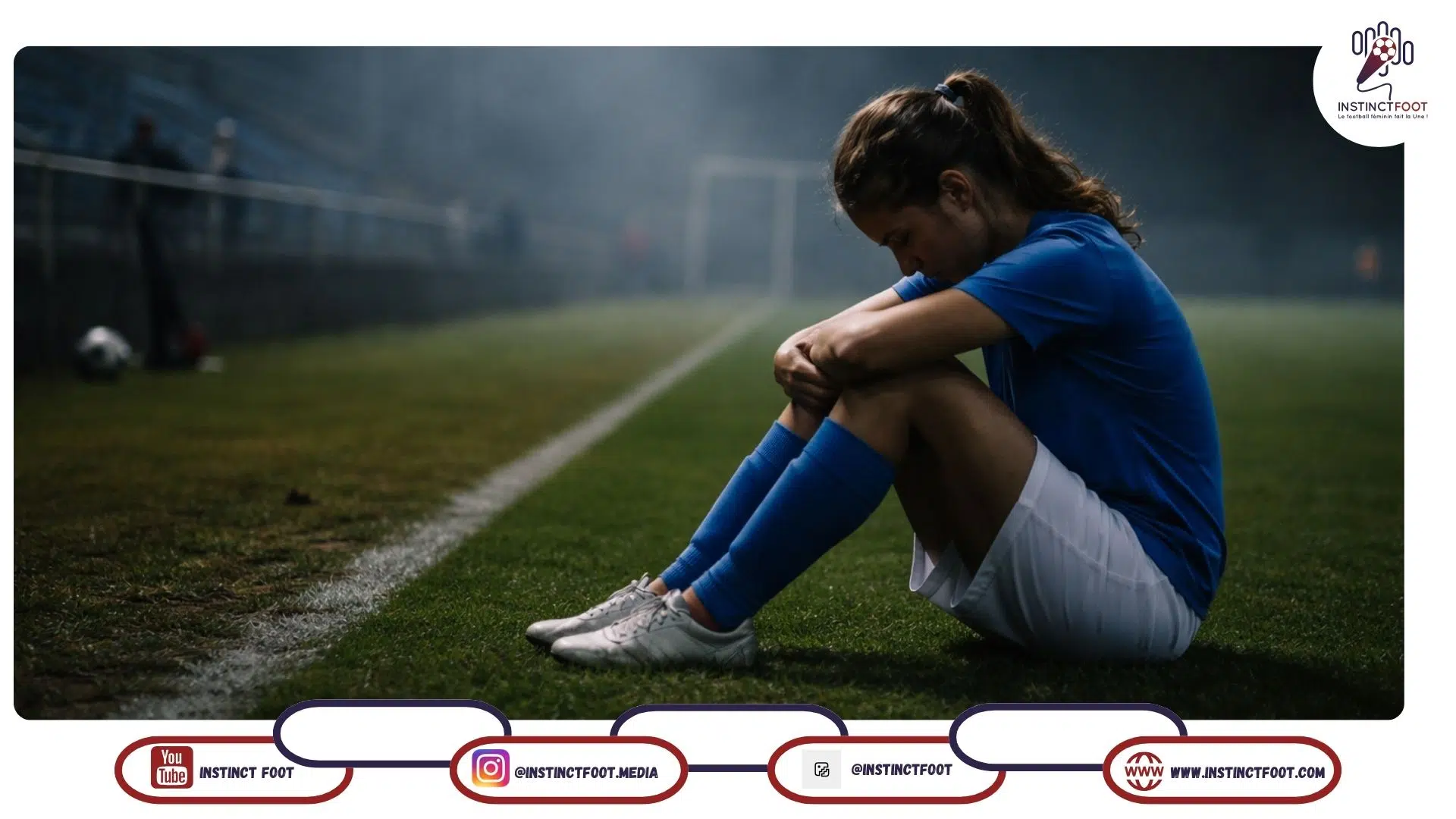
Women’s football is gaining visibility, professionalization, and media recognition. Yet behind this promising façade, many players live a much darker reality: psychological harassment, discrimination, racism, abuse of power, psychological isolation and a persistent taboo around mental health.
French Players Abroad: Exile as a Risk Factor
More and more French players choose — or are forced — to go abroad to continue their careers. While this can be beneficial athletically and financially, it also exposes them to new risks.
Language barriers
Not mastering the language of the host country means a player must rely on her agent or others to understand her contract, work environment and — most importantly — her rights. This can prevent her from expressing herself freely in case of conflict or distress, causing increasing isolation both on and off the field.
Biased internal investigations
In some clubs, during conflicts or internal investigations, translators provided are employed by the club — creating an obvious conflict of interest. These interpreters may not fully defend the player’s interests and can distort or filter her statements, exerting implicit pressure. For an isolated player without independent legal or linguistic support, the process is not in her favor.
Alone, without my agent, I was summoned by my club and had to talk with management through a club translator
Foreign Players in France: Solitude and Unknown Rights
France is not exempt from criticism. Foreign players competing in the First Division, Second Division or Division 3 face other major challenges.
Family separation
Leaving one’s home country often means a rupture with family and friends, increasing loneliness — especially when compounded by time zone differences. Some players live alone without any psychological support in an unfamiliar cultural environment.
Unclear or unknown rights
Many players do not know their contractual rights or how regulations differ between FIFA and the host country. This ignorance allows abuses to persist and weakens a player’s ability to defend herself.
Abuse of Power: When the Coach Becomes Judge and Executioner
One of the most sensitive issues is the abuse of power by some coaches. In 2025, there were still players who left training in tears and sank into depression — from amateur to professional clubs.
Psychological pressure and disguised sanctions
Some players report being sidelined without explanation, having their playing time reduced, or receiving sporting punishments despite good performance in training. Some who dared complain about inappropriate behavior from staff were forced to go on loan or request transfers sooner than planned.
The message from club staff is clear: “stay silent or disappear.”
Playing time as a tool of domination
Playing time can be used as a means to pressure or punish a player labeled “difficult,” discouraging internal and public speaking out.
When the Club Blocks a Career: Transfer Market Sabotage
Some players face more subtle forms of retaliation. Clubs can refuse to let a player leave, even with serious offers, by delaying responses or demanding unrealistic financial terms. The aim is to punish the player, isolate her, and send a deterrent message to others.
A System That Encourages Silence
Blocking transfers serves as a warning: any dissent could have career consequences. Lacking clear frameworks and effective sanctions, such practices continue.
Mental Health: The Persistent Taboo
Depression, anxiety and burnout affect elite athletes, yet mental health is still too often overlooked in women’s football.
Fear is the main driver of this silence. Players fear losing their place, being stigmatized as “weak”, or suffering reputational damage if they say they are struggling. Isolation, sporting pressures, discrimination and abuse form a fertile ground for psychological distress — all while mental preparation and pressure management are promoted in major competitions.
In football, we are expected to be strong all the time. Saying ‘I’m not okay’ risks labeling you as weak.
Breaking the Silence to Protect the Future
Discussing these realities is not meant to harm women’s football, but to protect it. When the Ligue Féminine de Football Professionnel was created, a protection agreement for players was to be established — yet it still hasn’t been finalized in 2025.
It is urgent to:
-
Ensure the signing of this agreement,
-
Guarantee independent investigations,
-
Provide neutral language assistance for all players worldwide,
-
Better inform players about their rights,
-
Fully recognize mental health as a central issue in the development of the sport.
Because women’s football cannot grow sustainably while turning a blind eye to the suffering of those who make it live
more articles in English

🇺🇸 Stephanie Frappart, the French Referee was appointed for the Euro Finale
France might no play the final of the euro but a French referee will be leading the game
🇺🇸 Paulo Cesar is the new head coach of Paris Saint Germain
After the Quiet departure of the coach Fabrice Abriel in the season 2024/2025, the temporary Coach Paulo Cesar was appointed head coach for next year Season. Paulo Cesar used to be the coach of the U19 women team.

🇺🇸 Eleni Rittmann moving to the French Women League ?
The 24-year-old player Eleni Rittmann gave an interview this weekend to Joana Swan; during this interview she confessed to her that when she was younger, Ronaldinho was the football player she was inspired by.
0 commentaires